
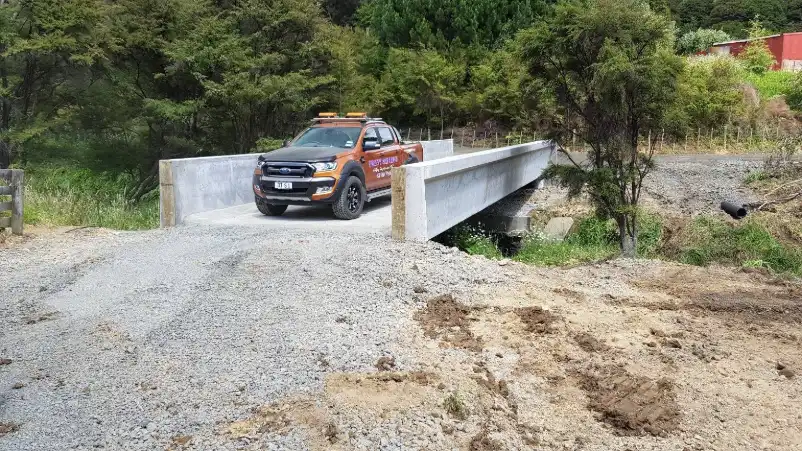
Reliable access matters for smooth farm operations. New Zealand’s rural landscapes throw up creeks, gullies, and uneven ground that need solid crossings. Farm bridge work must balance durability, cost, and what each site actually needs. Pre-stressed concrete farm bridges and traditional timber farm bridges are common options to evaluate. Weighing the pros and cons helps landowners make a clear decision that keeps their property moving safely and efficiently.
The Importance of Reliable Farm Access in New Zealand
Farms here rely on strong crossings that can handle floods, remoteness, and heavy daily loads. A dependable bridge keeps tractors moving, moves stock safely, and gets produce to market on time. When a bridge is restricted or fails, it causes delays, extra costs, and a lot of hassle.
Challenges in Rural Bridge Construction
Rural bridge projects must cope with uneven ground, sensitive ecosystems, tight access for plant, and the need to carry varied farm vehicles. Remote sites add complexity to maintenance and make the work more dependent on local roads and equipment.
How Pre-Stressed Concrete and Prefabricated Technologies Address These Challenges
Pre-stressed concrete farm bridges deliver exceptional structural strength and resilience, engineered specifically to handle heavy farm machinery and high flood risks. Prefabricated bridges are manufactured off-site, speeding installation and keeping quality consistent. Combining pre-stressed concrete design with prefabricated manufacturing delivers practical, durable, and cost-effective farm bridge solutions for demanding rural environments.
Understanding Pre-Stressed Concrete and Prefabricated Farm Bridges
Defining Pre-Stressed Concrete Farm Bridges
Pre-stressed concrete farm bridges utilise high-strength steel tendons placed under tension before the concrete cures. This engineering process dramatically increases the load capacity and span performance of the concrete deck, making it an ideal choice for farm bridges for heavy machinery, stock crossings, and long-term rural bridge construction.
What Are Prefabricated Farm Bridges?
Prefabricated farm bridges are manufactured off-site under controlled conditions and then transported to the farm for installation. Quigleys Farm Bridges specialises in prefabricated pre-stressed concrete components designed to offer maximum durability for rural properties and creek crossings.
Common Agricultural Applications for These Bridge Types
Both pre-stressed concrete and prefabricated bridges suit creek crossings, drainage access, and tracks used by heavy machinery and livestock. They provide durable bridges for rural properties that withstand constant daily use.
Benefits of Pre-Stressed Concrete in Farm Bridges
Structural Versatility and Strength
Pre-stressed concrete provides unmatched load-bearing capacity and structural stiffness. This allows longer spans over creek crossings without mid-span piers, keeping waterways clear and easily accommodating heavy farm machinery.
Renewable and Environmentally Friendly Materials
Modern concrete production incorporates sustainable methods and provides exceptional longevity. A long lifespan reduces resource use over time, making durable pre-stressed concrete a responsible, sustainable choice for farm bridge installation.
Repairability and Visual Compatibility with Rural Landscapes
Unlike timber, pre-stressed concrete does not rot, warp, or require regular chemical treatments. Its immunity to moisture, pests, and fire makes it a low-maintenance, cost-effective farm bridge solution over its full service life.
Advantages of Prefabricated Bridge Construction
Quality Consistency Through Off-Site Manufacturing
Factory manufacturing improves quality control and ensures consistent application of protective treatments. The result is a finished product with predictable performance.
Streamlined Installation and Reduced On-Site Disruption
Preassembled components cut on-site time, which means faster installation and less interference with farm work. That matters a lot where access is tight or the location is remote.
Suitable Solutions for Creek Crossings and Heavy Machinery Access
Prefabricated bridges can be engineered to precise load and span requirements, which is invaluable for safe crossings by heavy agricultural machinery.
Comparing Pre-Stressed Concrete, Timber, and Other Farm Bridge Types
Installation Requirements and Timelines
In timber vs concrete farm bridges, timber often requires extensive on-site framing and ongoing upkeep. Prefabricated pre-stressed concrete bridges shorten on-site installation timelines drastically while providing an immediate, heavy-duty crossing solution.
Structural Performance and Load Capacities
Pre-stressed concrete bridges deliver superior load capacities and long service life. While plain timber bridges may suit light vehicle access, engineered pre-stressed concrete designs excel under heavy agricultural equipment and frequent livestock movement.
Maintenance Needs and Long-Term Durability
Timber bridges require ongoing inspections and chemical sealing to prevent decay. In contrast, pre-stressed concrete requires minimal day-to-day upkeep and resists environmental wear and flood flows.
Environmental Impact and Sustainability Considerations
Off-site prefabrication of concrete bridge decks minimises on-site riverbed disturbance and runoff during installation, helping protect sensitive rural waterways and creek crossings.
Whole-Of-Life Cost Analysis
While initial capital investment varies, pre-stressed concrete prefabricated farm bridges prove to be extremely cost-effective farm bridge solutions when evaluating whole-of-life costs, reduced downtime, and virtually zero ongoing maintenance.
Designing Farm Bridges for Operational Efficiency
Supporting Heavy Machinery and Livestock Movement
Bridges must handle regular traffic from tractors, harvesters and livestock trucks. Accurate load assessments and the right material choices are essential for safe operation.
Importance of Load Capacity, Span Length, and Site Conditions
Span length, soil type and flood exposure all shape the best material and construction method. A solid design balances engineering requirements with the farm’s operational needs.
Flood Exposure, Engineering, and Regulatory Approvals
Bridges must meet local engineering standards and consent conditions covering flood resilience and structural safety. Professional design and correct approvals reduce future risk.
Planning for Installation Access and Ongoing Maintenance
Installation and maintenance access affects both design and material choice. Prefabricated bridges simplify on-site work, whereas timber designs may require more careful lifting and transport arrangements.
Quigleys Farm Bridges: Expert Solutions for Your Rural Bridge Needs
Customised Design and Manufacturing Services
Since 1987, Quigleys Farm Bridges has specialised in designing and making bridges that suit New Zealand farms. They tailor each solution to the site and the farm’s operational needs.
Compliance with New Zealand Standards and Environmental Requirements
Quigleys builds to local engineering codes and environmental rules, so bridges meet relevant standards and perform as expected.
Working with the Quigleys Team to Choose the Right Bridge
Farm owners get practical advice about site conditions, load demands and maintenance expectations. The team helps match the right bridge type to each property.
Making the Right Choice for Your Farm Bridge
Pre-stressed concrete engineering provides unmatched durability and heavy-machinery support, while prefabricated manufacturing speeds installation and ensures quality. Weigh site conditions, load demands, and maintenance preferences to select the ideal option. Quigleys Farm Bridges brings decades of expertise in pre-stressed concrete bridge design and installation.
Contact the Quigleys team to discuss your farm bridge project today.